Does your lower back ache after hours at your desk? You’re not alone. Many people experience back pain after sitting for extended periods, whether working from home, in an office, or driving long distances. The good news? You can prevent and reduce this discomfort with simple changes to your daily routine.
Let’s explore why sitting hurts your back and what you can do about it.
Why Does Sitting Cause Back Pain?
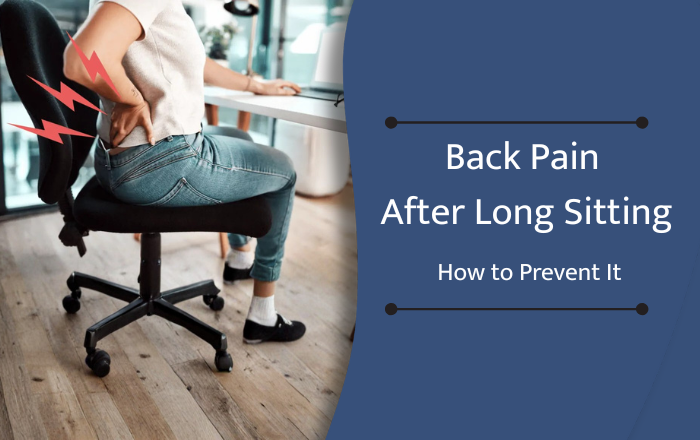
When you sit for long hours, your spine carries more pressure than when you stand. The discs between your vertebrae get compressed, and your lower back muscles become weak and tired. Poor posture makes things worse—slouching or leaning forward puts even more strain on your spine.
Add a poorly adjusted chair or desk to the mix, and you have the perfect recipe for chronic back pain.
7 Simple Ways to Prevent Back Pain from Sitting
1. Fix Your Sitting Posture
Good posture is your first defense against back pain from sitting all day. Here’s what proper sitting looks like:
- Feet flat on the floor with knees bent at 90 degrees
- Lower back supported with a gentle curve
- Shoulders relaxed, not hunched forward
- Computer screen at eye level
Think of stacking your ears over your shoulders and your shoulders over your hips. This alignment reduces stress on your spine.
2. Move Every 30 Minutes
Your body wasn’t designed to stay still for hours. Set a timer to remind yourself to stand up and move every 30 minutes. Walk to get water, stretch your arms overhead, or do a few gentle twists. These short movement breaks keep your muscles from getting stiff and tight.
3. Support Your Lower Back
If your chair lacks proper support, add a small cushion or rolled towel behind your lower back. This fills the gap between your spine and the chair, maintaining the natural curve of your lumbar region. You can find affordable lumbar support cushions online or at most stores.
4. Set Up Your Workspace Correctly
Your desk setup matters more than you might think. Position your monitor an arm’s length away with the top of the screen at or slightly below eye level. Keep your keyboard and mouse close enough that your elbows stay bent at 90 degrees.
If you work on a laptop, consider using a separate keyboard and raising your laptop on books or a stand.
5. Stretch Throughout the Day
Simple stretches can provide quick relief. Try these at your desk:
Seated Spinal Twist: Sit tall, place your right hand on the back of your chair, and gently twist to the right. Hold for 20 seconds, then switch sides.
Hip Flexor Stretch: Stand up, take a step back with your right leg, and gently push your hips forward. You’ll feel a stretch in the front of your hip and thigh.
Cat-Cow Stretch: On all fours (or seated), alternate between arching your back and rounding it like a cat.
6. Build Core Strength
Strong core muscles act like a natural brace for your spine. You don’t need a gym membership—simple exercises at home work great. Try planks (hold for 20-30 seconds), bridges (lying on your back with knees bent, lift your hips), and bird dogs (on all fours, extend opposite arm and leg).
Do these exercises 3-4 times per week, and you’ll notice the difference in how your back feels.
7. Consider a Standing Desk
Alternating between sitting and standing throughout the day reduces pressure on your spine. If a standing desk isn’t an option, try standing during phone calls or while reading documents. Even small changes in position help.
Quick Relief When Pain Strikes
If lower back pain from sitting too long catches up with you, try these immediate relief techniques:
- Ice or Heat: Use ice for the first 48 hours if pain is new or after injury. After that, heat helps relax tight muscles. Apply for 15-20 minutes at a time.
- Gentle Movement: Walk around slowly or do light stretches. Complete rest often makes things worse.
- Rest Positions: Lie on your back with knees bent and feet flat, or place your lower legs on a chair while lying down. Both positions take pressure off your lower back.
When Should You See a Doctor?
Most back pain after sitting improves with the changes mentioned above. However, see a doctor if you experience:
- Pain lasting more than a few weeks despite home care
- Pain shooting down your leg
- Numbness or tingling in your legs or feet
- Difficulty standing up straight
- Pain that wakes you at night
- Unexplained weight loss along with back pain
These symptoms might indicate a condition that needs medical attention.
Frequently Asked Questions
Q1. How long does back pain from sitting last?
Most mild back pain improves within a few days to two weeks with proper care and movement. Chronic cases may take longer but respond well to consistent posture improvements and exercise.
Q2. What’s the best sitting position for back pain?
Sit with your feet flat on the floor, knees at 90 degrees, and lower back supported. Keep your shoulders back and screen at eye level. Avoid crossing your legs or slouching.
Q3. Should I stop exercising if my back hurts?
No—gentle movement actually helps recovery. Avoid heavy lifting or high-impact activities, but walking, swimming, and stretching are beneficial. Listen to your body and stop if something increases your pain.
Get Help for Your Back Pain
If you’ve tried these prevention strategies but still struggle with back pain after sitting, it’s time to seek professional help. Sometimes underlying issues need proper diagnosis and treatment.
Dr. Parimal Kore, an experienced orthopedic doctor in Magarpatta at Racemous Polyclinics, Pune, specializes in treating back and spine conditions. Dr. Kore takes time to understand your symptoms and creates treatment plans tailored to your specific needs. Whether you need physical therapy guidance, medication management, or further evaluation, his clinic offers complete care for back pain.
Don’t let back pain control your workday or limit your activities.
Book an appointment with Dr. Parimal Kore at Racemous Polyclinics today and take the first step toward a pain-free life.
📍 Racemous Polyclinics, Magarpatta, Pune