If your knees ache every time you climb stairs, struggle to keep up during morning walks, or feel stiff after sitting too long, you’re definitely not alone. Millions of people deal with knee pain daily, and many are searching for solutions beyond endless painkillers or major surgery.
You may have heard about PRP treatment for knee pain—a therapy that uses your own blood to help heal damaged tissues. Athletes talk about it, doctors recommend it, but does it actually work? Let’s find out what science says and whether this treatment could be right for you.
What Is PRP Treatment?
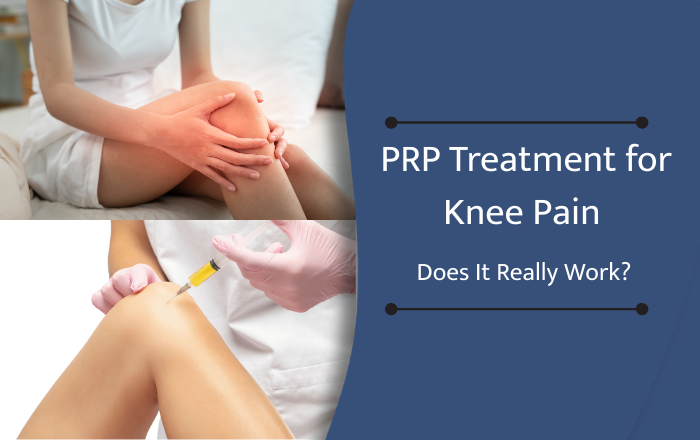
Platelet-rich plasma (PRP) therapy is a treatment where doctors take a small amount of your blood, process it to concentrate the healing platelets, and inject it back into your injured knee. Think of it as giving your knee a natural boost of healing power.
Here’s how it works:
Your blood contains platelets that help wounds heal. When concentrated, these platelets release growth factors that can reduce inflammation and encourage tissue repair. The entire process takes about 30-45 minutes at your doctor’s clinic.
The procedure is straightforward:
- Your doctor draws blood from your arm (just like a regular blood test)
- The blood spins in a machine for 10-15 minutes to separate the platelets
- The concentrated platelet-rich portion gets injected into your knee
- You rest for a bit, then head home
Does PRP Really Work? What Research Shows
The big question everyone asks: does PRP therapy for knee pain actually deliver results?
According to multiple clinical studies, yes—for many patients. Research shows that 60-80% of people experience meaningful pain reduction and better knee function after PRP injections. That’s a solid success rate.
Who benefits most from PRP:
- People with early to moderate knee arthritis
- Those with meniscus injuries or cartilage damage
- Patients with chronic tendon problems around the knee
- Individuals wanting to avoid or delay surgery
However, PRP works better for some people than others. If your knee has severe bone-on-bone arthritis, the results may be limited. Age matters too—younger patients with better natural healing tend to see better outcomes.
Benefits of PRP Treatment
1. Natural and Safe
Since PRP treatment uses your own blood, there’s very little risk of allergic reactions or rejection. Your body recognizes and accepts the treatment naturally.
2. Avoids Surgery
For many patients, PRP provides relief without going under the knife. No hospital stay, no lengthy recovery, no surgical risks. You can return to normal activities within a few days.
3. Long-Lasting Results
Unlike pain medications that wear off in hours, PRP injections for knee pain can provide relief lasting 6 months to 2 years. Some patients need repeat treatments, but the effects go beyond temporary symptom masking.
4. Few Side Effects
Most people experience only mild soreness at the injection site for a day or two. Serious complications are rare (less than 1% infection risk). Compare this to surgical risks, and PRP looks quite favorable.
What to Expect During Treatment
– Before your appointment:
Stop taking anti-inflammatory medications like ibuprofen for about a week—they can interfere with healing. Your doctor will give you specific instructions.
– During the procedure:
The injection itself feels similar to any shot—a brief pinch and some pressure. Many doctors use ultrasound guidance to place the PRP injection exactly where it’s needed. The whole visit takes under an hour.
– After treatment:
Rest your knee for 24-48 hours. Some swelling and stiffness are normal. Avoid strenuous activities for 1-2 weeks. Most patients start noticing improvement within 4-6 weeks, with full benefits developing over 2-3 months.
How Does PRP Compare to Other Treatments?
– PRP vs. Cortisone Shots:
Cortisone reduces inflammation quickly but doesn’t heal tissue. Relief lasts 6-12 weeks. PRP takes longer to work but addresses underlying damage and lasts much longer—6 months to 2 years.
– PRP vs. Surgery:
Knee replacement costs ₹3-6 lakhs and requires months of recovery. PRP treatment for knee pain costs ₹8,000-25,000 per injection, needs minimal recovery time, and can postpone or eliminate the need for surgery in many cases.
Cost and Investment
In India, PRP therapy typically costs between ₹8,000 and ₹25,000 per injection. Most patients need 1-3 injections spaced a few weeks apart. While this may seem expensive upfront, consider the alternative costs—repeated doctor visits, ongoing medications, lost work days, or eventual surgery.
Most insurance plans don’t yet cover PRP since it’s considered relatively new. Budget for out-of-pocket payment, but view it as an investment in your mobility and quality of life.
Potential Risks (The Truth)
PRP treatment is generally safe, but let’s be honest about possible issues:
– Common (and minor):
Temporary pain, swelling, or bruising at the injection site. These resolve within a few days.
– Rare but possible:
Infection (less than 1%), nerve irritation, or no improvement. About 15-20% of patients don’t respond well to treatment.
– Who should avoid PRP:
People with blood disorders, active infections, cancer, or those taking blood thinners should discuss alternatives with their doctor.
Tips for Best Results
If you decide to try PRP for knee pain, maximize your chances of success:
- Choose the right doctor: Look for an orthopedic surgeon experienced in PRP procedures. Technique matters significantly—the preparation method and injection accuracy affect outcomes.
- Follow instructions carefully: Rest when told, avoid NSAIDs before treatment, and don’t rush back to intense activities too soon.
- Combine with physical therapy: Strengthening the muscles around your knee improves stability and protects the joint. PRP works better when paired with proper exercise.
- Manage your weight: Every extra kilogram puts additional stress on your knees. Even modest weight loss can improve results dramatically.
- Be patient: Results don’t happen overnight. Give it at least 8-12 weeks before judging effectiveness.
The Bottom Line
So, does PRP treatment for knee pain really work? Yes, for most patients with mild to moderate knee problems. It’s not magic, and it won’t fix every knee issue, but clinical evidence supports its effectiveness.
PRP makes sense if you:
- Have early to moderate arthritis or soft tissue injuries
- Want to avoid surgery or delay it as long as possible
- Haven’t found lasting relief from other conservative treatments
- Are willing to invest in a natural, evidence-based approach
Consider other options if:
- You have severe bone-on-bone arthritis
- You need immediate pain relief (PRP takes weeks to work)
- Cost is prohibitive and insurance won’t cover it
Frequently Asked Questions
Q1. How painful is the PRP injection?
Most people describe it as a quick pinch with some pressure. The area is numbed beforehand, and discomfort is brief.
Q2. When will I feel better?
Some improvement within 2-4 weeks, but full benefits develop over 6-12 weeks as tissue heals and regenerates.
Q3. How long do results last?
Typically 6 months to 2 years. Some patients need maintenance injections to sustain benefits.
Q4. Can I walk after the injection?
Yes, but limit activity for the first day or two. Avoid running, jumping, or heavy exercise for 1-2 weeks.
Take Control of Your Knee Pain Today
Living with constant knee pain affects everything—your work, your hobbies, your mood. If you’re ready to explore whether PRP therapy for knee pain could help you move freely again, don’t wait until the damage worsens.
Dr. Parimal Kore, an experienced orthopedic surgeon in Magarpatta, Pune, specializes in PRP treatment for knee pain. With proven results and a focus on helping patients avoid unnecessary surgery, Dr. Kore can evaluate your condition and create a treatment plan tailored to your needs.
Schedule your consultation with Dr. Parimal Kore today and take the first step toward pain-free knees. Your active lifestyle is waiting.