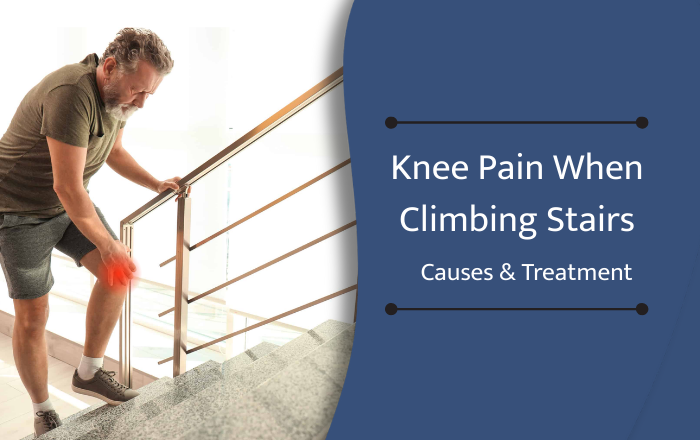
Does every step upstairs feel like a challenge? You’re not alone. That sharp pain or dull ache in your knee when climbing stairs affects thousands of people every day. It’s frustrating when something as simple as going upstairs becomes difficult or painful.
The good news? Most causes of knee pain when climbing stairs can be treated. Understanding what’s happening is your first step toward feeling better. Let’s explore why this happens and what you can do about it.
Why Stairs Make Your Knee Hurt
Your knee is one of your body’s hardest-working joints. When you climb stairs, each knee bears 3-4 times your body weight. This extra pressure reveals problems that normal walking doesn’t show. Think of stairs as a test for your knee—they expose issues that might be hiding during regular activities.
7 Common Causes of Knee Pain When Climbing Stairs
1. Runner’s Knee (Patellofemoral Pain Syndrome)
This is the most common reason for knee pain going up stairs. It happens when your kneecap doesn’t move properly in its groove.
You might notice:
- Dull pain around or behind the kneecap
- Pain that gets worse on stairs or when sitting long
- Clicking sounds when you move
Runner’s knee affects active people, those with weak thigh muscles, and people with flat feet.
2. Osteoarthritis
This happens when the cushioning cartilage in your knee wears down over time.
Signs include:
- Morning stiffness that improves with movement
- Pain that gets worse throughout the day
- Swelling after being active
- Difficulty straightening your knee
People over 50, those with past knee injuries, or people carrying extra weight are more likely to develop this condition.
3. Meniscus Tears
A tear in the rubbery cartilage that cushions your knee joint can cause significant pain on stairs.
You might feel:
- Sharp pain when twisting your knee
- Knee “catching” or “locking”
- Swelling within 24 hours
- Trouble bending or straightening your knee fully
This affects athletes who pivot often and older adults where tears can happen from simple movements.
4. Chondromalacia Patella
The cartilage under your kneecap becomes soft and breaks down, causing pain.
Symptoms include:
- Grinding sensation in your knee
- Pain that increases with stairs
- Tenderness on the kneecap
- Worse pain in cold weather
Young athletes and active teenagers often experience this, with women affected more than men.
5. IT Band Syndrome
The thick band of tissue on the outside of your thigh becomes tight and inflamed.
You’ll notice:
- Sharp or burning pain on the outer knee
- Pain with repetitive bending
- Tightness along the outside of your thigh
Runners, cyclists, and people who suddenly increase activity levels often develop this.
6. Tendonitis
Inflammation of tendons around your knee from overdoing activities.
Signs are:
- Pain just below or above the kneecap
- Tenderness when touching the area
- Mild swelling
- Stiffness after rest
7. Muscle Weakness
Weak thigh or hip muscles can’t properly support your knee during stair climbing.
You might experience:
- Unstable or wobbly knee
- Fatigue in leg muscles
- One leg feeling weaker than the other
This is often overlooked but can be one of the easiest problems to fix with proper exercises
When to See a Doctor
See a doctor if you have:
- Severe pain that doesn’t improve with rest
- Knee that gives out or buckles
- Visible swelling or deformity
- Unable to bear weight on the leg
- Pain lasting more than 2 weeks
Early treatment often means simpler solutions. Don’t wait until you can barely walk.
Simple Home Treatments
The RICE Method
Rest: Avoid stairs for 48-72 hours when possible Ice: Apply ice for 15-20 minutes every 2-3 hours Compression: Wear a knee sleeve to reduce swelling Elevation: Keep your knee raised above heart level
Gentle Exercises
Quad sets: Sit with your leg straight, tighten your thigh muscle, hold 5 seconds Straight leg raises: Lie down, lift your straight leg slowly Wall sits: Slide down a wall to a partial squat position
Start slowly and stop if you feel sharp pain. Some soreness is normal, but pain is not.
Lifestyle Changes
- Lose weight: Every pound lost removes 4 pounds of pressure from your knees
- Wear good shoes: Choose footwear with proper support
- Take stairs carefully: Lead with your good leg going up, painful leg going down
- Use the railing: Give yourself extra support
Treatment Options
Most knee pain from climbing stairs improves with physical therapy. A therapist will create exercises specific to your condition. Studies show this works for 60-80% of cases without surgery.
For more serious issues, doctors might recommend:
- Injections to reduce inflammation
- Arthroscopy for tears or cartilage damage
- Knee replacement as a last option for severe arthritis
Prevent Future Knee Pain
Keep your knees healthy by:
- Warming up before exercise
- Strengthening your leg muscles
- Maintaining a healthy weight
- Choosing low-impact activities like swimming
- Listening to your body and resting when needed
- Wearing supportive shoes
Frequently Asked Questions
Q1. Why does my knee hurt only while climbing stairs?
Because stairs increase pressure on the knee joint, any weakness or irritation becomes noticeable.
Q2. Is climbing down more painful than going up?
Yes. Coming down puts even more pressure on the joint—nearly 5–6 times your body weight.
Q3. Can knee pain improve at home?
Many people feel better with heat, ice, rest, and simple exercises.
Get Help for Your Knee Pain in Magarpatta
Don’t let knee pain when climbing stairs control your life. If home treatments aren’t working after 2 weeks, it’s time to get help.
Dr. Parimal Kore is an experienced orthopedic surgeon offering knee pain treatment in Magarpatta. Dr. Kore specializes in diagnosing and treating all types of knee conditions, helping patients return to active, pain-free lives.
Why visit Dr. Parimal Kore?
- Accurate diagnosis using proper testing
- Treatment plans that fit your lifestyle
- Both non-surgical and surgical options available
- Focus on getting you moving freely again
Don’t wait for the pain to get worse. Whether you need guidance on exercises, treatment options, or just want to understand what’s causing your pain, Dr. Kore can help.
📍 Located in Magarpatta, Pune 📞 Schedule your visit today
Remember: Taking action early often means easier treatment and faster recovery. Your knees carry you through life—give them the care they need.