Osteoporosis rarely announces itself. Most women find out they have weak bones only after a wrist fracture from a minor fall or a nagging backache that won’t go away. That’s the frustrating part about this condition; it builds up quietly for years before it becomes obvious.
If you’re a woman past 40, your bone density has likely already started to decline, especially as you approach menopause. The good news is that osteoporosis isn’t inevitable. With the right knowledge and a few lifestyle changes, you can protect your bones for decades to come.
This article walks you through what osteoporosis actually is, why women over 40 face higher risk, the early warning signs most people miss, and practical steps you can take starting today.
What Is Osteoporosis, Exactly?
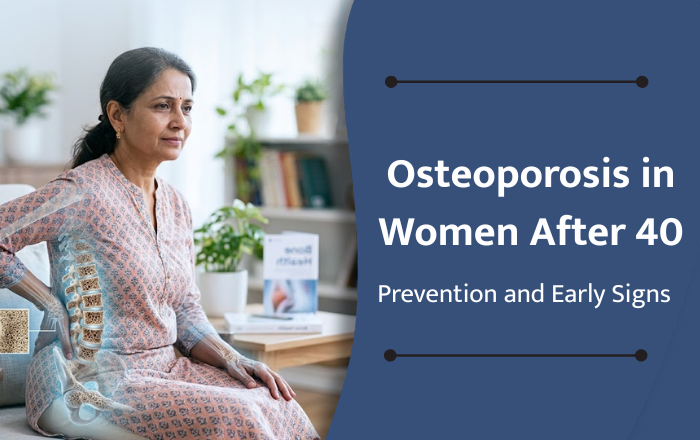
Osteoporosis is a condition where bones become weak and brittle due to loss of bone density and tissue. Think of healthy bone as a honeycomb structure with tightly packed holes. In osteoporosis, those holes grow larger and the honeycomb becomes fragile, making fractures far more likely, even from small bumps or falls.
Bone isn’t a static, lifeless structure. It’s constantly being broken down and rebuilt throughout your life. Up until your late 20s or early 30s, your body builds bone faster than it breaks it down. After that, the balance shifts, and bone loss gradually outpaces bone formation.
Why Women After 40 Are More at Risk
Several factors make women particularly vulnerable to osteoporosis after 40, and most of them come down to hormones.
The Estrogen Connection
Estrogen plays a protective role in maintaining bone density. As women approach perimenopause and menopause, typically between ages 45 and 55, estrogen levels drop sharply. This decline speeds up bone loss significantly, sometimes by as much as 2 to 3 percent per year in the initial years after menopause.
Other Contributing Factors
Beyond hormonal changes, several other elements increase risk:
- Family history: If your mother or grandmother had osteoporosis, your risk is higher.
- Body frame: Petite or thin-framed women tend to have less bone mass to begin with.
- Low calcium and vitamin D intake: Years of inadequate nutrition catch up eventually.
- Sedentary lifestyle: Bones need weight-bearing activity to stay strong.
- Smoking and excessive alcohol: Both interfere with bone-building cells.
- Certain medications: Long-term steroid use, some thyroid medications, and certain antidepressants can weaken bones over time.
Early Signs of Osteoporosis You Shouldn’t Ignore
This is where things get tricky. Osteoporosis is often called a “silent disease” because it typically shows no symptoms until a fracture occurs. Still, your body sometimes gives subtle clues worth paying attention to.
1. Back Pain That Won’t Go Away
Persistent, dull back pain can indicate a small compression fracture in the spine, something that happens more often than people realize with weakened vertebrae.
2. Loss of Height Over Time
If you’ve noticed you’re an inch or two shorter than you used to be, it could be due to spinal compression caused by weakening vertebrae.
3. A Stooped Posture
A gradual hunching of the upper back, sometimes called a dowager’s hump, often develops as spinal bones lose density and start to collapse slightly.
4. Fractures From Minor Falls
Breaking a bone from a fall that shouldn’t have caused serious injury, like slipping on a wet floor, is one of the clearest signs that bone density has already dropped significantly.
5. Weak Grip Strength
Some research links reduced grip strength to lower bone density, since both muscle and bone health tend to decline together with age.
6. Receding Gums
Bone loss in the jaw can cause gums to recede, which is why some dentists are actually the first to flag potential osteoporosis in patients.
If any of these signs sound familiar, it’s worth discussing them with a doctor rather than brushing them off as normal aging.
How Is Osteoporosis Diagnosed?
The most common and reliable test is a DEXA scan (Dual-Energy X-ray Absorptiometry). It’s quick, painless, and measures bone mineral density, usually at the hip and spine. Doctors generally recommend this scan for:
- Women aged 65 and older
- Women under 65 with risk factors like early menopause or family history
- Anyone who has already experienced a fracture from a minor injury
The results are given as a T-score, which compares your bone density to that of a healthy young adult. A T-score of -2.5 or lower indicates osteoporosis, while a score between -1 and -2.5 suggests osteopenia, an early stage of bone loss.
Prevention Strategies That Actually Work
The best time to start protecting your bones was years ago. The second-best time is right now.
Prioritize Calcium and Vitamin D
Women over 40 typically need around 1,000 to 1,200 mg of calcium daily, along with adequate vitamin D to help the body absorb it properly. Good sources include:
- Dairy products like milk, yogurt, and cheese
- Leafy greens such as spinach and kale
- Fortified cereals and plant-based milk
- Sunlight exposure for natural vitamin D production
- Fatty fish like salmon and mackerel
Make Weight-Bearing Exercise a Habit
Bones respond to stress by becoming stronger, similar to how muscles grow. Activities that work well include:
- Brisk walking or jogging
- Dancing
- Stair climbing
- Light weight training
- Yoga and resistance band exercises
Aim for at least 30 minutes of weight-bearing activity most days of the week.
Cut Back on Smoking and Alcohol
Smoking reduces blood supply to bones and interferes with calcium absorption. Heavy alcohol use similarly disrupts the bone remodeling process. Reducing both can make a measurable difference over time.
Get Enough Protein
Bone is roughly half protein by volume, so adequate intake supports its structure. Include eggs, lentils, fish, poultry, and dairy in your regular diet.
Watch Your Caffeine and Sodium Intake
Excessive caffeine and high sodium diets can increase calcium loss through urine. Moderation, not elimination, is usually the practical approach.
Consider Bone Density Screening Proactively
Don’t wait for symptoms. If you’re approaching menopause or have risk factors, ask your doctor whether a baseline DEXA scan makes sense for you.
Osteopenia vs Osteoporosis: What’s the Difference?
| Aspect | Osteopenia | Osteoporosis |
|---|---|---|
| T-score | -1 to -2.5 | -2.5 or lower |
| Bone density | Below normal, but not severe | Significantly reduced |
| Fracture risk | Moderately increased | High |
| Reversibility | Often manageable with lifestyle changes | Requires medical treatment plus lifestyle changes |
Key Takeaways
- Osteoporosis develops silently, so don’t wait for obvious symptoms to take action.
- Women after 40, especially around menopause, face accelerated bone loss due to falling estrogen levels.
- Watch for subtle signs like back pain, height loss, and stooped posture.
- A DEXA scan is the gold standard for diagnosis.
- Calcium, vitamin D, weight-bearing exercise, and avoiding smoking or excess alcohol form the foundation of prevention.
Frequently Asked Questions
Q1. At what age should women start worrying about osteoporosis?
Bone density typically begins declining after age 30, but the sharpest drop happens during and after menopause, usually between 45 and 55. It’s wise to start bone-protective habits well before then.
Q2. Can osteoporosis be reversed?
Osteoporosis can’t be fully reversed, but its progression can be slowed significantly, and in some cases bone density can improve with proper treatment, nutrition, and exercise.
Q3. Is walking enough exercise to prevent osteoporosis?
Walking helps, but combining it with resistance or strength training gives better results, since bones respond best to varied types of mechanical stress.
Q4. Does osteoporosis only affect older women?
While risk increases with age, younger women with early menopause, eating disorders, or certain medical conditions can also develop osteoporosis.
Concerned About Your Bone Health? Get Expert Orthopedic Care Today
Your bones are working hard behind the scenes every single day, and after 40, they deserve a bit more attention. Small, consistent habits, like getting enough calcium, staying active, and going for regular checkups, can make a real difference in how your bones hold up in the years ahead.
If you’re experiencing symptoms related to bone health, joint pain, or recovering from a fracture, consider consulting Dr. Parimal Kore, MBBS, DNB (Orthopedics), an experienced Orthopedic Surgeon with over 15 years of practice, specializing in bone and joint health including osteoporosis management. He practices in Magarpatta, Hadapsar. A professional evaluation can help you understand your bone health status and get a treatment plan suited to your individual needs.