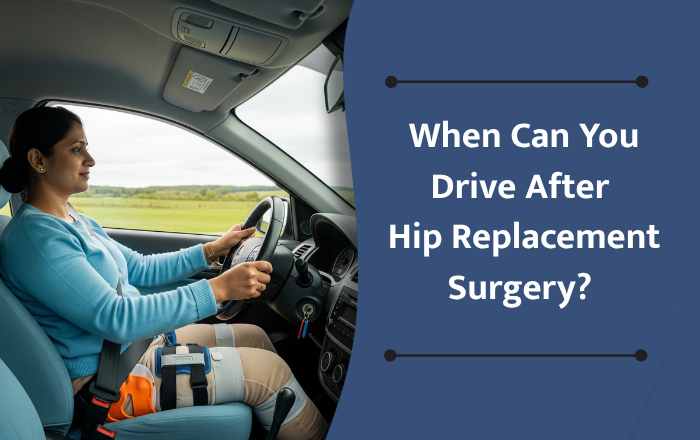
Most people can safely drive after hip replacement surgery somewhere between 4 and 8 weeks, but only once their orthopedic surgeon confirms it. The NHS advises waiting at least 6 weeks. Your exact timing depends on which hip was operated on, how well you are healing, the medicines you take and the vehicle you drive.
Driving often means independence, so wanting to get back behind the wheel is natural. Below, we explain what affects the timing, how to tell if you are ready and how to keep your first drives safe.
How Long After Hip Replacement Can You Drive?
There is no single date for everyone. Here is what trusted guidance says:
- The NHS suggests waiting at least 6 weeks and checking with your doctor that you are fit to drive.
- A systematic review on driving after total hip replacement found that surgeons usually recommend 4 to 8 weeks. In simulator studies, braking speed was generally back to its level before surgery by about 6 weeks.
- The American Academy of Orthopaedic Surgeons advises waiting until you have stopped opioid painkillers and your strength and reflexes are closer to normal.
These figures are a guide, not a promise. Some people are ready a little earlier, while others need longer, especially after complications or with other health conditions.
Why Driving Too Early Is Risky
In an emergency, you must lift your foot off the accelerator and press the brake hard within a fraction of a second. In the early weeks, a few things can slow you down:
- Weak muscles: The muscles around the hip need time to regain strength and control.
- Pain and stiffness: Both can delay your reaction when braking suddenly.
- Medicines: Some painkillers cause drowsiness.
- Hip precautions: Getting into a low car seat can bend the hip more than is safe early on. Our guide on precautions after hip replacement surgery explains these rules.
Does It Matter Whether It Was Your Right or Left Hip?
Yes, though perhaps not in the way most people expect.
After a Right Hip Replacement
Your right leg controls the accelerator and the brake, so you need enough strength and speed in that leg to stop safely. This is why surgeons are usually more careful after a right hip replacement.
After a Left Hip Replacement
Many people assume they can drive almost straight away after a left hip replacement. Research does not fully support this, because your weight shifts onto the left side of the pelvis each time your right foot moves between pedals.
There is also an Indian angle. Many cars here have a manual gearbox, so your left leg works the clutch constantly in city traffic. An automatic car may be easier, but discuss this with your surgeon first.
Signs You May Be Ready to Drive Again
Before asking for clearance, check whether you can honestly say yes to these:
- You no longer need painkillers that make you sleepy.
- You can walk comfortably without a walker.
- You can get in and out of the car without breaking your hip precautions.
- You can press the brake firmly and quickly, again and again, without pain.
- You can turn to check mirrors and blind spots.
- You can sit comfortably for the whole journey.
Even if you tick every box, the final word should come from your surgeon at your review visit.
Can You Ride a Scooter or Motorcycle After Hip Replacement?
In Pune, many people rely on a scooter or motorcycle every day. Riding asks different things of your hip than driving a car does.
You need good balance and must hold up the vehicle with your legs at every signal. A pothole or sudden stop may force you to put a foot down quickly. Swinging your leg over a motorcycle seat can also push a new hip beyond its safe range in the early months.
So ask your surgeon specifically about two wheelers rather than assuming the car timeline applies.
How to Get Into a Car Safely After Hip Replacement
You will likely travel home from the hospital as a passenger, so learn the right technique early:
- Push the front seat fully back and recline it slightly.
- Stand with your back to the seat until you feel it behind your legs.
- Hold a stable part of the car and lower yourself slowly, keeping the operated leg slightly forward.
- Slide back, then lift both legs in together without twisting at the hip.
- If the seat is low, a firm cushion can stop your hip from bending too much.
Reverse these steps to get out. On longer trips, stop now and then to stretch and walk.
Tips for Your First Few Drives
Once your surgeon clears you, ease back in gradually:
- Sit in the parked car first and practise moving between pedals.
- Start with a short trip on quiet roads when traffic is light.
- Take along a family member who drives, in case they need to take over.
- Check with your motor insurer whether recent surgery affects your cover.
Regular physiotherapy and good joint replacement aftercare help you build the strength that driving needs.
Frequently Asked Questions
1. Can I drive 2 weeks after hip replacement surgery?
For most people, two weeks is too early. A few small studies found braking speed recovered quickly in some patients, but most guidance still advises waiting longer. Pain, medicines, weak muscles and hip precautions can all affect safety at this stage, so wait until your surgeon examines you and clears you.
2. Can I drive an automatic car sooner after a left hip replacement?
An automatic car removes the clutch, so it may be easier on the left hip. Your left side still supports your body while braking, though, and getting in and out still needs care. Some patients may be allowed to drive a little earlier, but only your surgeon can decide this.
3. When can I travel as a passenger after hip replacement surgery?
Most patients go home from the hospital as passengers, so short trips are usually fine early on. Use the correct technique to get in and out, choose a higher seat where possible and avoid bending the hip too much. For long journeys, plan regular breaks and ask your doctor about extra precautions.
4. Is it safe to drive while taking painkillers after surgery?
Stronger painkillers can cause drowsiness and slow your reactions, so do not drive while taking medicines that affect your alertness. If you are unsure about a particular tablet, ask your doctor or pharmacist. Driving is usually considered only after you have stopped strong painkillers and your reflexes have recovered.
5. Will a minimally invasive hip replacement let me drive sooner?
Some studies suggest braking ability may return sooner with newer surgical techniques. Still, the approach is only one factor. Your age, muscle strength, general health, medicines and which hip was operated on all matter. Your surgeon will guide you based on how your own recovery is progressing.
Talk to Your Orthopedic Surgeon Before You Drive Again
Driving again is a real milestone, but rushing it helps no one. Follow your physiotherapy plan, keep your review appointments and drive only after your surgeon gives the go-ahead.
If you have had a hip replacement or are planning one, Dr. Parimal Kore, Orthopedic Surgeon, MBBS, DNB (Orthopedics), has 15+ years of experience in orthopedic surgery and joint replacement. He is Managing Director of Racemous Polyclinics in Magarpatta and can assess your recovery and advise when driving is safe for you. Read more about hip replacement surgery at the clinic.
Name: Dr. Parimal Kore | Orthopedic Surgeon in Magarpatta
Address: Racemous Polyclinic, Marvel Fuego, 5150, Magarpatta Rd, above Kwality Restaurant, Amanora Park Town, Hadapsar, Pune, Maharashtra 411036
Phone: 99881 13030